Understanding the Language of Early Childhood Care & Education
When families begin searching for care and education for their young child, they may encounter terms like daycare, childcare, preschool, and early learning. While these terms are often used interchangeably, each can describe a different part of a child’s early childhood experience.
The terminology can be helpful, but it does not tell the whole story. The quality of a program is shaped by what happens within it—the relationships children build, the opportunities they have to play and explore, and how educators support their development.
At Sounds and Colors, we describe our program as a childcare and early learning school because we believe care and education belong together. Our focus is on caring for the whole child while creating an intentional environment where children can learn, grow, and discover.
What Does “Daycare” Mean?
The term daycare commonly refers to a place where children receive care and supervision during the day while their parents or guardians are working or otherwise unavailable. The word itself emphasizes an important practical need: providing children with a safe, dependable place to spend their day.
But being called a daycare does not determine the quality of the experience a child receives. Many daycare programs offer engaging learning environments, meaningful relationships, and opportunities for children to play, explore, and develop new skills. Likewise, programs called preschools can differ significantly in their approach.
When comparing daycare options, it is helpful to look beyond the name and consider the program’s philosophy, educators, environment, approach to learning, and what a typical day looks like for the children in its care.
How Childcare Has Evolved
As our understanding of early childhood development has grown, so has the language we use to describe the care children receive. Childcare is often a broader term than daycare, reflecting the many ways a program supports children throughout their day.
Care involves much more than supervision. Young children also need responsive relationships, opportunities to communicate, meaningful play, and time to explore and make sense of the world around them.
Today, high-quality childcare increasingly recognizes that care and learning are connected. Everyday interactions, routines, conversations, and play can all contribute to a child’s development. In this sense, childcare can be an important part of early childhood education, creating a foundation for children to feel secure, curious, connected, and ready to learn.
This broader understanding of childcare helps explain why some programs, including Sounds and Colors, choose language that reflects both care and early learning.
What Is Preschool?
Preschool generally refers to an early education program for children before they enter kindergarten. These programs may support social-emotional development, communication, early literacy and numeracy, problem-solving, creativity, and learning through play. Depending on the provider, preschool may be offered part-time or as a full-day program.
One difference families may notice when comparing childcare vs. preschool is the age range or primary focus of the program. Some preschools primarily serve children approaching kindergarten, while childcare centers may welcome children across a broader range of ages.
However, there is considerable overlap between the two. A childcare program may provide rich preschool learning experiences, just as a preschool may provide full-day care. For families, understanding what children experience each day is more useful than relying on the label alone.
Daycare vs. Childcare vs. Preschool: Understanding the Differences
So, what is the difference between daycare vs. childcare vs. preschool? While the terms can have different meanings, there is considerable overlap between them:
| Term | Generally Emphasizes |
| Daycare | Care and supervision during the day |
| Childcare | Care, relationships, development, and daily support |
| Preschool | Early education and preparation for kindergarten |
| Early Learning | Development, exploration, learning, and growth throughout early childhood |
These descriptions are useful starting points, but they are not strict categories. A daycare may offer meaningful early learning experiences. A childcare center may provide preschool education for older children. A preschool may offer full-day care and serve many of the same needs as daycare.
The important thing to remember when comparing daycare vs. preschool or daycare vs. childcare is that no single label guarantees a better experience. What matters is the quality of care, the approach to learning, the relationships children build, and how thoughtfully the program supports their development.
Why Sounds and Colors Uses “Childcare” and “Early Learning School”
At Sounds and Colors, we describe our program as a childcare and early learning school because we see care and education as deeply connected. That distinction reflects how we approach each child’s experience.
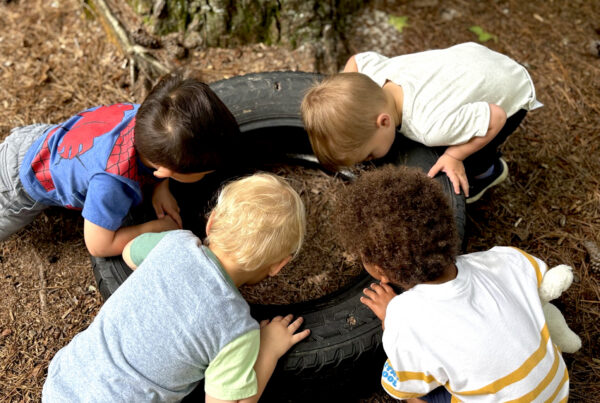
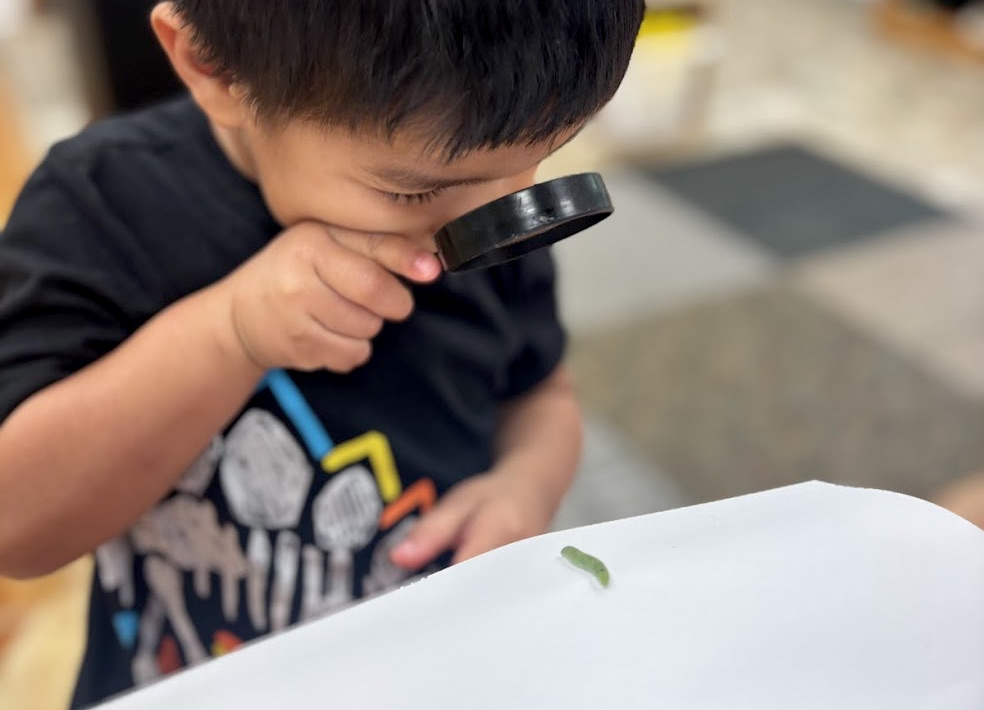
Caring for the child means building trusting relationships and paying close attention to who they are, what interests them, and the questions they bring with them. Their ideas can help shape learning experiences, while play, exploration, and conversation create opportunities to discover and make meaning. Our intentionally designed environments support this process, reflecting our Reggio-inspired approach. Through Spanish immersion, children also experience language as a way to communicate, connect, and understand different cultures.
At the center of it all is the belief that children are capable, curious participants in their own learning—not simply recipients of care.
What to Look for in a High-Quality Daycare or Childcare Center
When comparing a daycare, childcare center, preschool, or early learning school, look beyond the name and consider what your child will experience each day.
Start with the relationships your child will develop. Do educators know each child and respond thoughtfully to their needs, interests, and ideas?
Consider the learning environment, too. Are children encouraged to explore, create, ask questions, and follow their curiosity? Is play recognized as an important way children learn?
It can also be helpful to ask about educator training and ongoing professional development, communication with families, and what a typical day looks like. Look for an environment that feels welcoming, engaging, safe, and intentionally designed for children.
Most importantly, consider whether the program’s philosophy aligns with your family’s values. The question isn’t simply, “What is this program called?” but “How does this program care for and educate my child?”
Childcare as Part of the Infrastructure That Supports Families
Reliable childcare is an important part of the infrastructure that supports families and communities. When children have a place where they are cared for, engaged, and supported, parents can work and participate in their communities with greater confidence. At the same time, high-quality early learning gives children experiences that can support their development as they grow and enter school.
At Sounds and Colors, Spanish immersion adds another dimension, giving children opportunities to develop language skills and cultural understanding from an early age.
In this way, childcare and early learning serve more than an immediate need. They help create stronger foundations for children, families, and the communities around them.
Conclusion: Look Beyond the Label
For many families, searching for daycare is the first step toward finding the right place for their child. But the label is only the beginning. Daycare, childcare, preschool, and early learning programs can overlap in meaningful ways, so it is worth looking closely at how each program approaches relationships, play, learning, language, family partnerships, and children’s development.
At Sounds and Colors, our approach comes back to a simple idea of keeping children’s care at the center of childcare. If you’re looking for a childcare and early learning school where children are encouraged to be curious, capable, and active participants in their learning, we invite you to learn more about Sounds and Colors by scheduling a tour with us.