A community grows strong when people bring their own stories to the table and make room for everyone else’s, too.
Every year our Reggio-emilia preschool is shaped by the moments we share. Some are big and joyful, with families gathered and children bursting with excitement. Others are small enough to miss: a song at morning meeting, a hand held on the walk outside. Over time, these moments become the shared memory of the Sounds and Colors community.
November, with its focus on gratitude and gathering, gives us a natural pause to ask a few questions about the rituals, celebrations, and school traditions that shape us. Why do we celebrate at all? What do our traditions teach children about themselves and others? And how can the moments we share help every family feel at home, whatever traditions they bring?
Many Families, Many Ways to Celebrate
Each child arrives at our door carrying a family story. Our families speak different languages, hold different beliefs, and mark special days in their own ways. That variety is one of the things we treasure most about our community.
Early childhood educators Louise Derman-Sparks and Julie Olsen Edwards, known for their work on anti bias education, offer a helpful way to think about holidays at school. In their view, helping children learn about a holiday is a different thing from expecting every child to celebrate it.
When children learn about one another’s traditions, they get curious about how other families live and what matters to them. Nobody is asked to take on beliefs that aren’t their own.
We keep that idea close when celebrating holidays in the classroom. Across the year, our calendar makes space to honor cultural heritage, remember important moments in history, and thank the people who make our lives richer. Some families won’t mark every occasion, and that’s fine. Each family’s identity deserves the same respect.
Latina Appreciation Week carries special meaning in a Spanish immersion school like ours, and last month we wrote about how Spanish becomes a bridge between cultures.
Martin Luther King Jr. Day and Juneteenth open simple, age-appropriate conversations about fairness, dignity, and freedom. Young children may not yet grasp the full weight of history, but they do know how it feels to be left out, to be treated fairly, and to be truly listened to.
Little by little, children learn that you don’t have to be alike to belong. Our role as educators is to nurture this emerging awareness with sensitivity, authenticity, and respect.
The Rhythm of the Year
Look at our school calendar and you’ll find more than a list of events. It has a rhythm, and that rhythm says something about what we value.
Many of our traditions follow the seasons. The Spring Festival, Spring Gatherings, Earth Day Celebration, International Day of Play, International Mud Day, and Water Play Days all send children outside to dig, splash, run, and wonder.
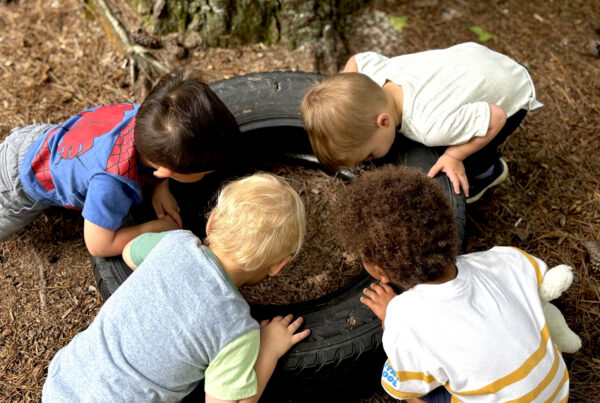
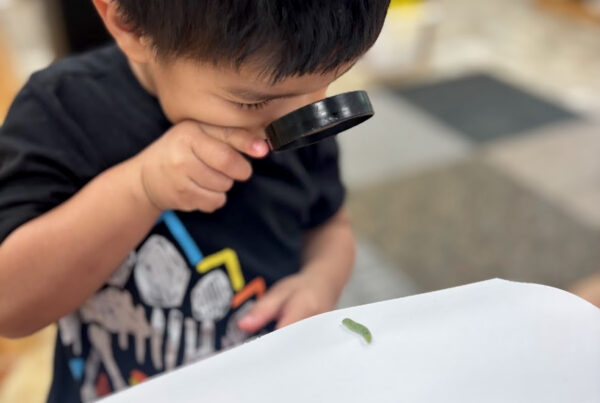
In a Reggio Emilia-inspired school, nature is full of questions waiting to be asked, and children lead the way. Squishing mud between their fingers or spotting a beetle in the garden can become a small ritual of its own. Often the best celebrations need very little planning, only time together and room to explore.
Other traditions celebrate the people in children’s lives. Mother’s, Father’s, and Grandparents’ Family Days all carry the same simple message: Love Makes a Family. Families come in many shapes, and each of these days honors the people who keep children safe and loved.
During Teacher Appreciation Week, we thank the educators whose patience and care make each classroom feel like home. At our Pre-Kindergarten Graduations, we gather for a bittersweet milestone and mark how far our oldest children have come.
Making Learning Visible
Our Spring and Fall Gatherings open our classrooms to families twice a year. They grow out of our Reggio Emilia-inspired approach, where children make sense of the world through relationships, hands-on exploration, and conversation.
Reggio Emilia documentation is how we share that learning with families. Photos, children’s own words, drawings, and documentation panels show the questions children asked and the ideas they tested along the way. This kind of pedagogical documentation lets families see the thinking behind a project, well beyond the finished piece.
At our recent Fall Gatherings, families walked through the documentation, talked with educators, and swapped stories with one another. Our schools filled with conversation and a shared sense of what young children can do.
That conversation continues this month with parent-teacher conferences. They give families and educators time to look at each child’s growth together and strengthen the bond between home and school. If you haven’t booked a time yet, your child’s educators can help.
Small Rituals, Every Day
Many of our traditions never appear on a calendar because they happen every day. A child is greeted by name at the door. Morning meetings begin in the same comforting way. Friends talk over lunch, sing in Spanish, and listen to stories together. An educator stops to take a child’s surprising question seriously.
Classroom rituals like these give young children a steady rhythm they can count on. Knowing what comes next helps them feel safe, and feeling safe helps them see themselves as an important part of the group. In the Reggio Emilia philosophy, these relationships are where learning begins.
Day after day, rituals of welcome and attention show children that they matter and that their ideas are worth hearing. Big celebrations bring us together, but these everyday moments hold us together the rest of the year.
Finding Gratitude Together
This month brings our Thanksgiving Celebration, a chance to explore gratitude in ways that feel real to young children.
We help children notice the people who look after them, the friends they play with, and the beauty they find outside. Children share their thanks in their own ways, through words, drawings, a hug, or a kind act for a friend. With practice, gratitude becomes a habit of noticing and caring for others.
In December, our Wonders of Winter Holiday Traditions will invite children to learn how different families celebrate the season. Through cultural traditions, shared music, storytelling, family gatherings, or moments of quiet reflection, we hope children continue to discover that there are many beautiful ways to experience belonging and togetherness.
The Traditions We Create at Our Reggio Emilia Preschool
Our traditions matter because of the relationships they build and the memories they leave behind. We hope every child grows up knowing their family’s story is worth telling, and that every family feels at home in the community our founders set out to build.
Our educators bring one question to each tradition: what is this experience teaching children about who they are, about the people around them, and about the world?
Asking that question year after year helps us build a place where every child and family feels seen, heard, and respected.
Discover a Community Committed to Growth
At Sounds and Colors, continuous learning shapes the experiences we create every day. Through Reggio-inspired education, Spanish immersion, ongoing educator growth, strong relationships, and thoughtful reflection, we continue working to create meaningful opportunities for children to learn and thrive.
We would love for you to visit one of our campuses and meet the educators who bring this community to life.
Inspired by Reggio Emilia. Immersed in Spanish. Grounded with Love.
Frequently Asked Questions
How can families share their own traditions with their child’s classroom?
Families are warmly invited to share the traditions, stories, songs, and celebrations that matter to them. The best first step is a conversation with your child’s educators, who can help find a meaningful way to bring your family’s traditions into classroom life, whether through a visit, a story, or a shared object from home.
Does my child have to take part in every celebration on the calendar?
No. If your family does not observe a particular holiday, tell your child’s educators. They will work with you on how your child takes part, whether that means joining in, learning alongside friends, or choosing a different activity that day. The goal is that every child feels comfortable and respected.
When are parent-teacher conferences, and how do I schedule one?
Parent-teacher conferences begin in November. They give families and educators time to reflect together on each child’s growth, interests, and relationships, and to plan for the months ahead. Your child’s educators will share available times and how to sign up, and you are always welcome to reach out to them directly with questions.