Understanding the Reggio Emilia Approach
As more families seek alternatives to rigid, curriculum-driven models of education, Reggio Emilia offers a flexible and responsive approach that values creativity, relationships, and learning through exploration.
The Reggio Emilia approach is a well-respected, child-centered philosophy for early childhood education that places children’s curiosity and capabilities at the heart of learning. Rather than focusing on predetermined outcomes, this philosophy encourages children to ask questions, collaborate with others, and discover meaning through hands-on experiences.
In this article, we’ll explore the history of the Reggio Emilia approach, its core values, and what families can expect to see in a Reggio-inspired classroom, beginning with where this influential philosophy first took shape.
The Origins and History of Reggio Emilia
The Reggio Emilia approach began in the years following World War II in the town of Reggio Emilia, Italy, as families sought a new vision for education rooted in hope, collaboration, and respect for children.
Educator and psychologist Loris Malaguzzi played a central role in shaping this philosophy, working alongside parents and teachers to develop learning environments that honored children’s ideas and abilities.
Influenced by strong social values such as community involvement, democratic participation, and mutual respect, the approach views education as a shared responsibility between children, educators, and families.
Rather than following a fixed or standardized curriculum, Reggio Emilia is a guiding philosophy that adapts to the interests of each group of learners. Today, its influence extends worldwide, inspiring early childhood programs that prioritize curiosity, creativity, and meaningful learning experiences.
Core Values of the Reggio Emilia Philosophy
The Image of the Child
At the heart of the Reggio Emilia philosophy is a deep respect for children as capable, curious, and full of potential. Children are viewed as active participants in their learning rather than passive recipients of information. Learning begins with their interests, questions, and ideas, allowing educators to build meaningful experiences that reflect each child’s natural curiosity.
Relationships at the Center of Learning
Reggio Emilia emphasizes the importance of strong relationships between children, educators, families, and the broader community. Learning is seen as a social process, shaped through collaboration, conversation, and shared experiences. Teachers work alongside children as partners in learning, while families are valued as essential contributors to the educational journey.
The “Hundred Languages of Children”
This concept recognizes that children express understanding in many ways, including art, movement, language, music, play, and storytelling. Creativity is not separate from learning but a vital pathway through which children explore ideas, solve problems, and communicate their thinking.
The Environment as the Third Teacher
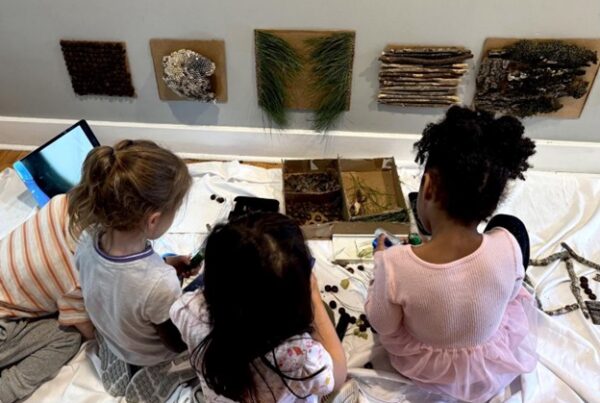
Reggio-inspired classrooms are intentionally designed to inspire exploration and discovery. Natural materials, open-ended resources, and calm, thoughtfully arranged spaces invite children to engage deeply with their surroundings and learning experiences.
What Reggio Emilia Looks Like in the Classroom
A Reggio Emilia–inspired classroom is a dynamic, engaging space where learning unfolds through curiosity, exploration, and collaboration. Instead of following preset lesson plans, educators observe children’s interests and use them as the foundation for project-based learning. These projects may evolve over days or weeks, allowing children to explore topics in depth, ask questions, and build understanding at their own pace.
Teachers play a supportive role as observers, collaborators, and facilitators of learning. Instead of directing instruction, they listen carefully, ask thoughtful questions, and provide materials or experiences that extend children’s thinking. This approach encourages children to take ownership of their learning while feeling supported and guided.
Documentation is an important part of the Reggio Emilia classroom. Educators capture children’s learning through photographs, written observations, and displays of children’s work. These tools make learning visible and help children reflect on their ideas while keeping families connected to the learning process.
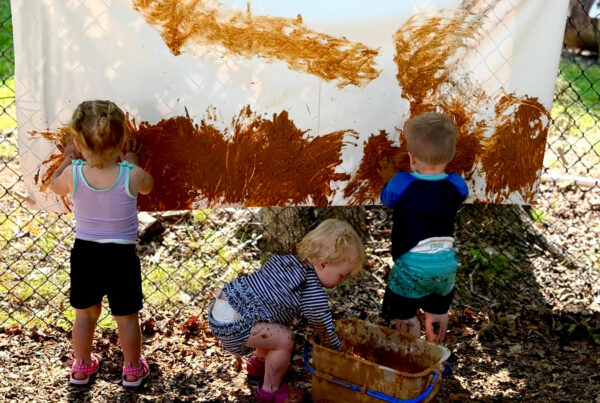
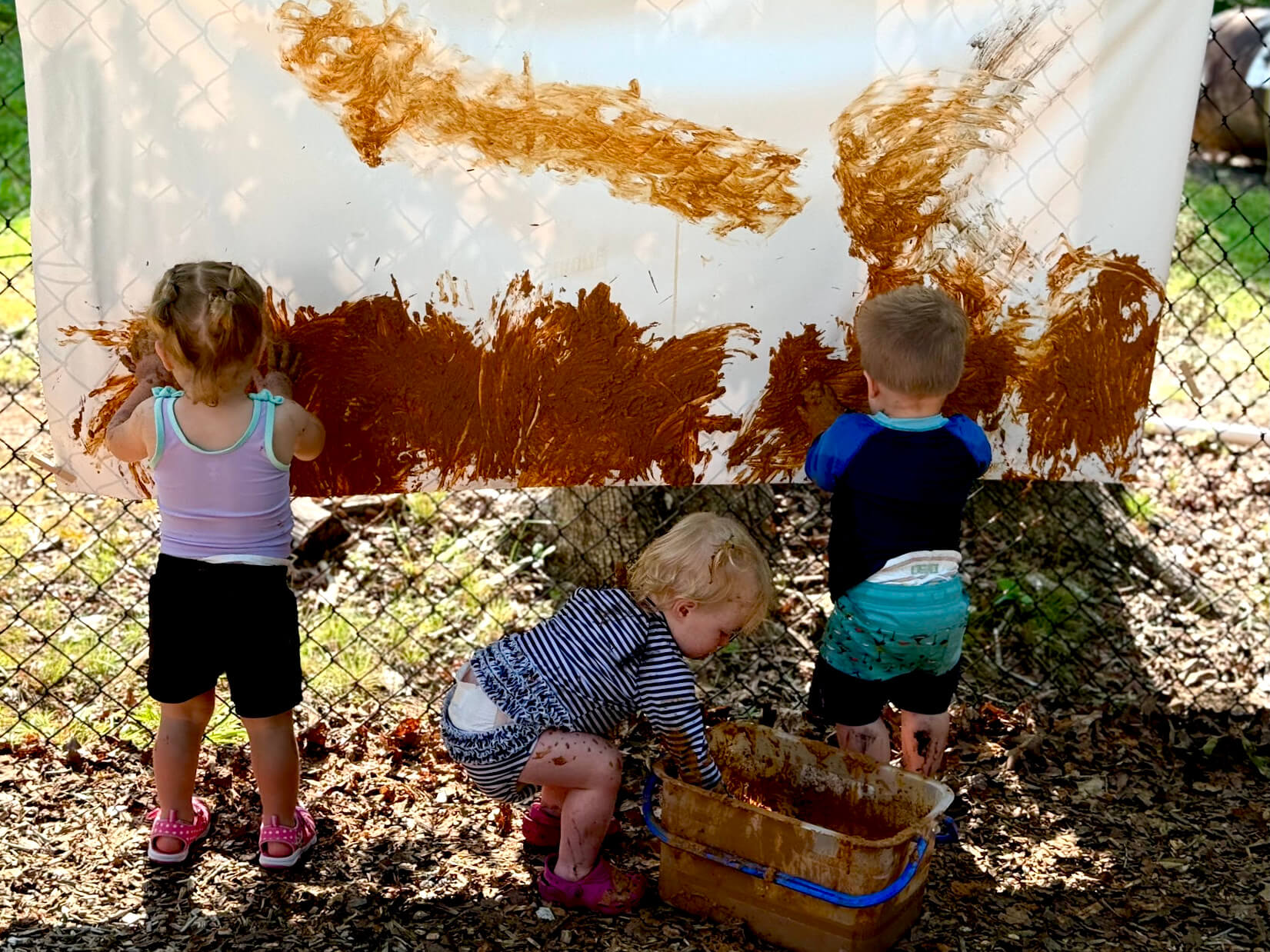
Hands-on exploration, problem-solving, and inquiry are central to daily experiences. Children engage with meaningful, real-world materials that spark imagination and critical thinking. Whether exploring nature, experimenting with art, or working together to solve challenges, learning is active, purposeful, and deeply engaging.
Why Families Are Drawn to the Reggio Emilia Approach
Many families are drawn to the Reggio Emilia approach because it offers a more personalized and respectful learning experience for young children. By honoring each child’s interests, ideas, and pace of development, this philosophy supports social-emotional growth, creativity, and critical thinking alongside academic foundations.
Families often value the strong partnerships that Reggio-inspired programs foster, where communication and collaboration between home and school are encouraged. Parents and caregivers are seen as active participants in the learning process, helping create a consistent and supportive environment for children.
At its core, the Reggio Emilia approach aligns with the values of lifelong learning and whole-child development, nurturing curiosity, confidence, and a genuine love of learning that extends beyond the classroom.
A Thoughtful Approach to Early Learning
Rooted in its postwar origins in Italy, the Reggio Emilia approach has grown into a respected philosophy that values curiosity, creativity, and meaningful relationships.
By honoring children as capable learners and designing classrooms that invite exploration, this approach offers an enriching alternative to traditional, curriculum-driven models. Reggio Emilia recognizes that every child learns in their own way and at their own pace, supporting both confidence and independence.
When early learning environments are built around respect, collaboration, and wonder, children are empowered to develop a lifelong love of learning.
Ready to Explore a Reggio Emilia Early Childhood Experience?
If the Reggio Emilia approach resonates with you, Sounds and Colors is a place where that philosophy comes to life every day. At Sounds and Colors, children learn through play, inquiry, and connection in environments thoughtfully designed to reflect their ideas and spark exploration.
You’ll find a Reggio-inspired educational experience that also embraces Spanish immersion, outdoor learning, socio-emotional development, and healthy, mindful meals to support the whole child.
Plan a tour to one of our schools to discover the difference a Reggio Emilia–inspired education can make for your child.